The Wamuran Irrigation Scheme will divert Class A recycled water from the Caboolture South Sewage Treatment Plant to farms, giving those participating in the Scheme greater certainty for crop planting and enabling them to expand their operations.
In its first stages, the Scheme will deliver about 2.6 gigalitres of recycled water per year – the equivalent of 1051 Olympic swimming pools – to a number of farming operations in the region producing raspberries, strawberries, pineapples, avocados and turf. As the population grows and the supply of recycled water increases, more will be distributed and more growers from the region will be able to access the Scheme.
The Class A recycled water produced by the Scheme will go through a rigorous treatment, disinfection and testing process before being used to irrigate crops.
Unitywater is working closely with Queensland Health and the Department of Regional Development, Manufacturing and Water to ensure it complies with all state and national public health and food safety regulations as the Scheme progresses.
Print our downloadable factsheet for more information about how the Scheme will work.
Expected population increases in the Moreton Bay region will create additional loads through Unitywater’s sewage treatment plants and higher effluent volumes following treatment.
Unitywater identified a unique opportunity to treat recycled water at the Caboolture South STP to Class A standard, then supply the water to farmers who currently rely on their own dams or local creeks to irrigate their crops.
In 2016, Unitywater commissioned a survey to gauge interest from agribusinesses in the Wamuran area about the use of recycled water on food and turf crops, which was met with a lot of interest. A number of foundation customers were identified using a weighted multi-criteria process that included their location and projected recycled water demand. We also considered a diverse range of crops, with an even mix of seasonal and day/night water requirements, so the Scheme could handle peak demands. Crops in the first stage of the Scheme include raspberries, strawberries, pineapples, avocados and turf.
The Scheme was constructed during 2022 and 2023 and is due to be operational in late 2024.
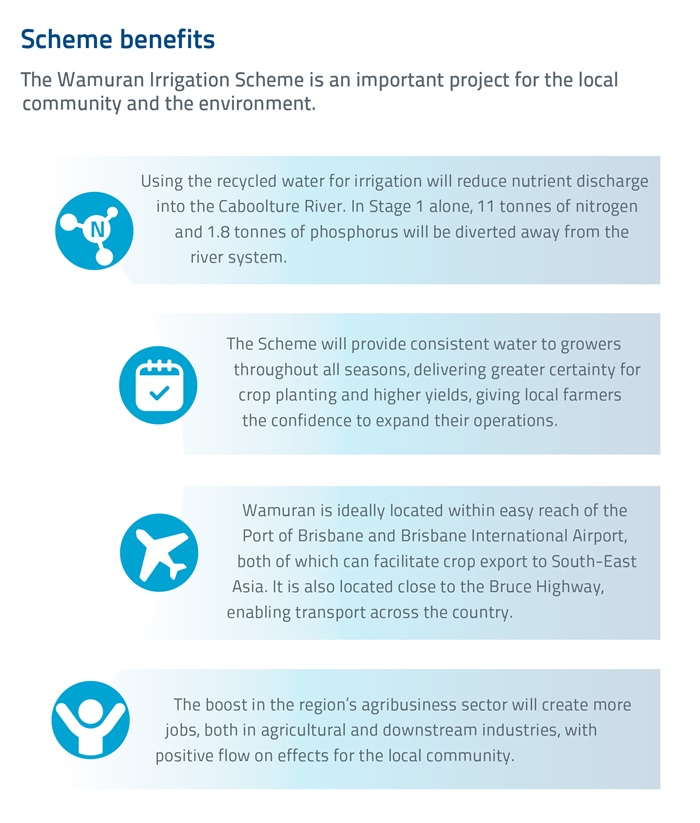
Benefits from the Scheme include providing a high quality, secure water supply for growers and reducing effluent and nutrient volumes being discharged into the Caboolture River. As more water becomes available from the Caboolture South STP, the Scheme will expand to service more local growers.
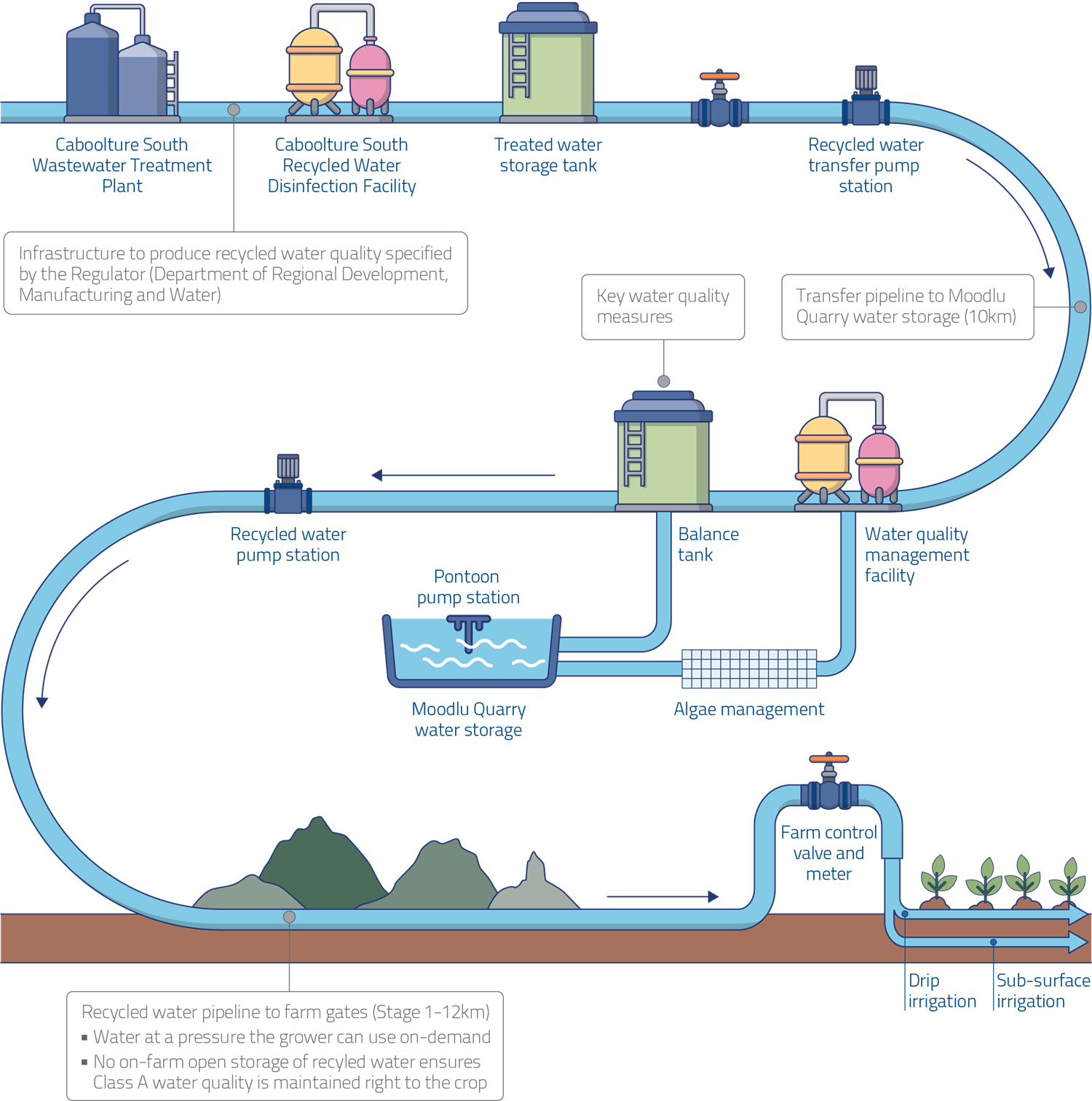
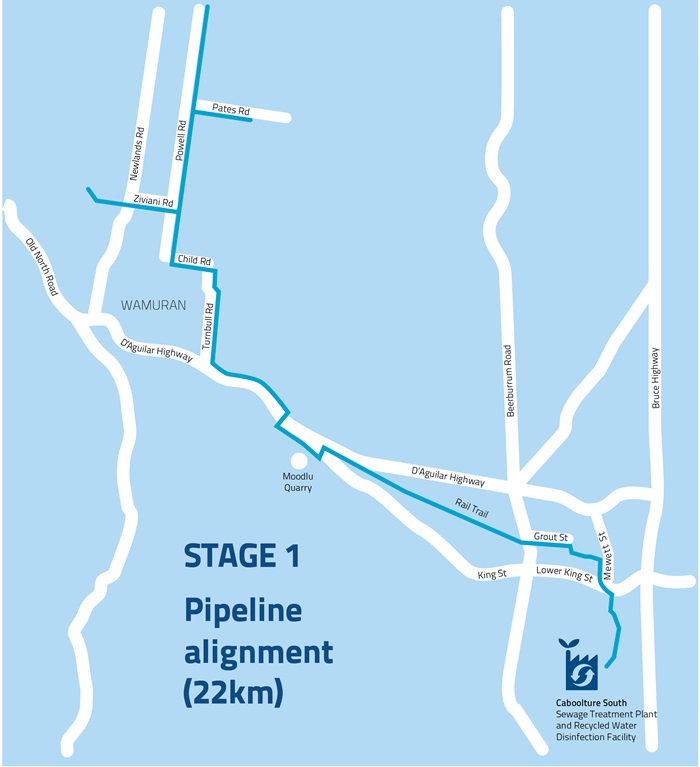
Wastewater from the Caboolture South STP will be treated in a disinfection facility before it is transferred via a 10km pipeline to Moodlu Quarry, where it will pass through a water quality management facility.
Moodlu Quarry will be used for mid-stream balancing storage to ensure that surplus water is held to meet peak seasonal crop demand.
Moodlu Quarry is critical to the success of the Scheme and from late February 2022, will become an active construction zone with strict site access protocols in place.
In Stage 1, water will be delivered to farms from the Moodlu Quarry pump station through another 12km pipeline to safely irrigate turf and food crops.
How the Wamuran Irrigation Scheme will operate: